


Routine vehicle maintenance and general auto repair services are two things: they’re the most common types of services your vehicle will undergo, and they are crucial to extending the longevity of your vehicle. General auto repair services can range from the routine, such as oil and lube services, tire change services, brake inspections, and maintenance services, to the more complex, like a fluid replacement, BG flushes, engine belt repair and replacement or transmission services and repair. When your vehicle needs a routine auto repair or maintenance service, it is essential to consider the positive long-term cumulative effects of taking care of your vehicle. By taking your vehicle to your trusted auto repair shop for necessary general automotive repair and routine vehicle maintenance services, you are providing critical preventative care for your vehicle and saving yourself time and money in the long run. When you take care of minor auto repairs and vehicle maintenance services, you save time, money, and trouble down the road.
Common General Vehicle Maintenance and Auto Repair Services Include:
- Oil Change and Lube Services
- Tire Maintenance and Repair Services
- Brake Inspections, Maintenance, and Repair
- Fluid Replacement and Repair Services
- Engine Belt Replacement and Repair Service
- BG Flushes
Oil Change and Lube Services
Consistently replacing your vehicle’s oil is essential to maintaining your vehicle and ensuring that it operates optimally. Your vehicle utilizes oil in several ways: it ensures that the individual components of your engine are running smoothly and appropriately. It minimizes friction, reduces shock, and prevents corrosion. Your vehicle’s manufacturer suggests an oil change schedule usually based on mileage or time appropriate for your vehicle.
Tire Maintenance and Repair Services
Your tires are the “shoes” of your vehicle and endure a lot of wear and tear, all while keeping you safely on the road. If your tires no longer pass the penny test, if your tread is worn down and your tires look bald, or you have a recurring mysterious air leak, it is time to take your vehicle to a reputable auto repair shop. Making sure your tires are aligned and rotated is also an essential routine vehicle maintenance checkpoint.
Brake Inspections, Maintenance, and Repair
Your vehicle’s brakes are the most critical safety feature of your vehicle. If you hear squeaking or grinding when you put on the brakes or feel shuddering or unresponsiveness while driving, it is time to take your vehicle in for a brake inspection. Your skilled mechanic will be able to determine if the problem stems from the brake pads, the rotors, or the brake lines. Routine brake and vehicle maintenance services are required to ensure that your brakes function correctly.
Fluid Replacement and Repair
Transmission fluid, brake line fluid, power steering fluid, coolant, engine oil, and windshield washer fluid are all vital to your vehicle’s proper function and optimal performance. Ensuring that your vehicle’s fluids are topped off and serving their purposes is something a reputable general auto repair shop would be able to help you with.
Engine Belt Replacement and Repair
The three primary belts in an internal combustion engine are the serpentine belt, the V belt, and the timing belt. The serpentine belt moves energy to several key components of your vehicle’s engine and is common in newer cars. Before serpentine belts were the norm, V-belts served similar purposes. Your timing belt opens and closes your engine’s valves in time with your engine’s pistons. One of the primary ways you will know that it is time to have your belts checked out and replaced is if you’re hearing sounds coming from underneath your hood. Slapping, squeaking, and a harsh idle are all signs that it is time to have your belts checked out by a reputable auto repair shop.
BG Flushes
Part of general vehicle maintenance and auto repair includes topping off the vital fluids in your vehicle. Fluids build up over time, which can hinder your vehicle’s performance and cause unnecessary wear and tear. Sometimes, it is necessary to completely empty and replace old fluids with fresh fluids to ensure that your vehicle runs optimally. Other times, a service like a BG flush, which utilizes a unique tool to flush out the old fluid and build-up or debris from your transmission or other parts, is a great idea. Contact a reputable local general auto repair shop today to speak with a highly trained automotive technician about whether a BG flush is suitable for your vehicle.
General Auto Repair and Routine Vehicle Maintenance
If you have questions about general vehicle maintenance and auto repair services, call your local and reputable general auto repair shop today. Their skilled, experienced, and knowledgeable automotive technicians will be happy to answer any questions you may have about general auto repair and vehicle maintenance services. If you suspect that it is time for an oil change, tire service, brake service, fluid top-off, BG flush, or an engine belt replacement, give your mechanic a call today.
When Does Your Vehicle Need Suspension Repair?
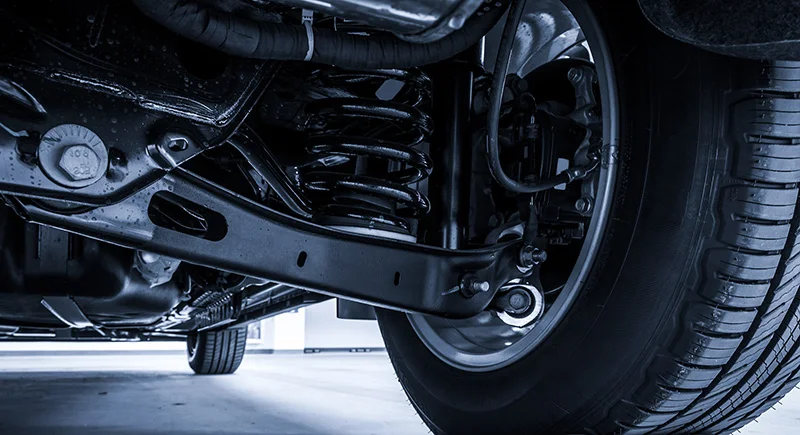
The suspension system in your vehicle is an important part of your drive’s operation and ride quality. The shocks and struts absorb the impact and weight of your vehicle and can wear out over regular wear and tear. A bad suspension dramatically affects your ability to control your vehicle. It helps maintain control when stopping or turning, so riding on a lousy suspension could be a safety hazard. You may need suspension repair if you have experienced any of the symptoms mentioned in this blog. Call our auto repair shop today for more information!
What is your suspension?
Your vehicle’s suspension is the parts on your vehicle comprising of shock-absorbing components such as springs or shocks (also called dampers). By absorbing impacts from road bumps or other impacts, your suspension helps ensure a smooth and safe ride. It also helps you stay in contact with the road increasing safety and friction! The shocks help control the height and load of the cabin and suspension. At the same time, the shocks absorb and dampen the impacts your vehicle experiences driving down the road. Your vehicle could also have an anti-sway bar which helps stabilize the direction of your vehicle as it moves down the road. It does this by shifting the movement of your wheels relative to your steering wheel.
Why is your suspension important?
Your suspension is an integral part of your vehicle because it acts as a cushion between you and the road. It prevents you from feeling every bump in the street and prevents your vehicle from bouncing. It absorbs the energy transferred through your vehicle’s wheels and attempts to dissipate it so you have a smoother ride. If your suspension is left damaged could domino into a safety issue when you are driving. Taking tight turns or stopping abruptly could spell trouble if your vehicle needs suspension repair.
How do you know if you need suspension repair?
There are several ways to indicate the need for suspension repair. They are:
- Drifting or pulling while turning
- Nose dives while stopping
- Damaged or oily shocks
- Vehicle doesn’t ride smoothly
- Uneven tire treads
If you’re experiencing these symptoms, you may need suspension repair. You can even do a simple test to see if your suspension is wearing out. This test is called the “bounce test,” where you put all of your weight on the front of the vehicle, bounce a couple of times, and let go. If your vehicle continues to rock more than two or three times, your suspension is likely wearing out. Do this on both the front and back of your vehicle to see!
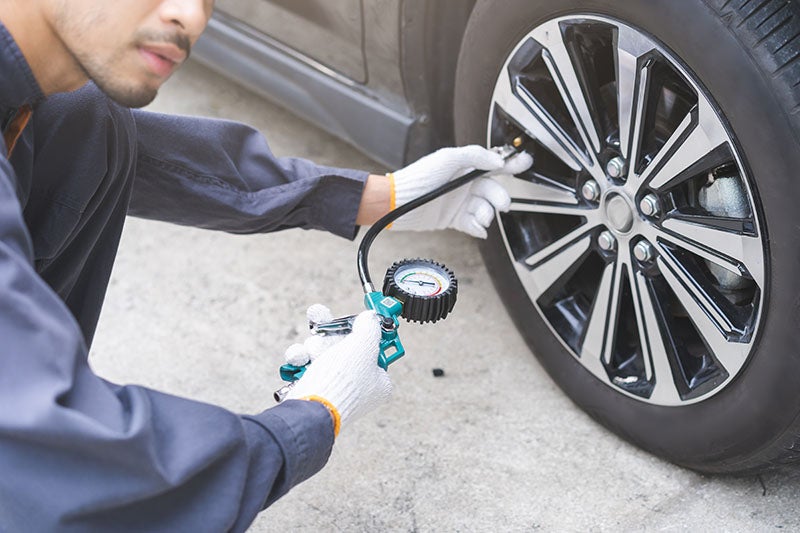
The tires on your vehicle undergo some of the most strenuous activities that the vehicle performs. They are always in contact with the road and experience many different types of debris and erosion. Fighting off problems with preventative maintenance is a solution to maximizing your tire’s life. Having your tire pressure checked, your tires rotated, and a wheel alignment done are just some examples. However, knowing and understanding the signs that something is wrong and that you need tire repair is also essential for your tire’s life cycle. You don’t want to end up on the side of the road with a blown tire because you didn’t know the signs that something was wrong. Unfortunately, there is nothing you can do about a nail, metal chunk, or glass sitting on the road ready to damage your tires, but there are several other ways that your tires could become damaged you might not know about.
Types of Tire Damage
Many different types of damage can occur on your tires. If you notice any of these trends happening to you, you might need tire repair! Observing and identifying the different types of tire damage will allow you to confidently figure out what kind of tire repair you may need.
- Regular Wear – Regular wear is normal as long as it occurs evenly across all your tires simultaneously. Preventative tire maintenance can help reduce the everyday wear and tear on your tires, but ultimately, they will still degrade over their use.
- Sidewall Damage- Sidewall damage can occur because the tire is thinner and more vulnerable to damages. Bulges here are likely the result of an impact, either from a pothole or a curb, which causes the pressure inside to protrude onto the surface.
- Punctures & Cuts- This is the most common type of tire damage, but it is also the most unexpected. Road debris often contains sharp, foreign objects like glass or stones that can rupture your tire and cause a leak.
- Irregular Tread Wear- There are many types of irregular tread wear that can occur due to overinflated tires (Center wear) or misaligned tires (one-sided wear). The amount and location of wear can indicate why your vehicle’s tires are damaged.
- Cracked Tire Damage- Cracked tire damage is generally caused by bad road conditions but can be caused by prolonged exposure to the sun.
Indicators that you need tire repair
There are several indicators that your vehicle might need tire repair. The first is a flat tire! If your tire is leaking air, you need to get it repaired; any consistent change in tire pressure could be an issue! If you notice a reduction in the handling of your vehicle, you could also need tire repair. Another indicator of repair to look out for is bulges on the sidewall of your tire. Visually looking at your tires to see where the erosion on your tires can indicate a need for tire repair if they are not eroding in the correct area. Lastly, check the tread on your tires; you can do this by using the penny method. You first put a penny in one of the ribs of the tire, Lincoln’s head pointed towards the tread. If the top of his head disappears, you are good to go, but it may be time for a tire replacement if you can see his entire head.
Components of Wheel Balance

Wheel balance is a likely cause of vibration in your vehicle. Tire and wheel imbalance can result in premature wear to the suspension and steering parts. Wheel imbalance can also cause issues with traction loss and a cupped tire wear pattern. Wheel balancing is a critical part of maintaining the life of your tires, as proper wheel balancing ensures you have a smooth and vibration-free drive. Your tires are the most abused parts of your vehicle, where they are in constant connection with the roads while also undergoing the stresses of braking and acceleration loads. Our auto repair shop strives to keep your wheels and tires in the utmost condition so that you can stay safe and keep control of your vehicle.
What is Wheel Balance?
Wheel balancing is balancing the weight of a tire and wheel assembly so that it travels evenly, even at high speeds. Wheel balancing issues can be caused by issues in manufacturing or just from normal wear and tear. New tires generally have minor imbalances from the factory that are easily correctable by adding a wheel weight. Balancing requires putting a mounted wheel and tire on one of our balancers. This machine spins the wheel to determine where the weights should go. The goal of a wheel balance is to ensure the weight is distributed evenly throughout the wheel. Even if the difference in weight is minor, it will create a vibration in the vehicle when there is enough momentum. This is uncomfortable and dangerous, which is why we fix these issues for you at our auto repair shop.
Types of Wheel Weights
There are two types of wheel weights that auto repair shops use to balance your vehicle’s wheels. Firstly, we use clip-on weights, which clip to your rim and add weight to that specific part of the tire. These weights are:
- Fast to attach
- Expensive
- Visible on the wheel when placed outside
Whereas the other type of weight we use is a stick-on weight. These weights are:
- Slower to install
- Cheaper
- Adhesive can wear off
Indicators You Need a Wheel Balance
Tires can become imbalanced due to uneven tire wear, improper inflation, or road debris buildup on the tires. As you drive, your vehicle might have an imbalance as this causes bouncing or shaking and affects the vehicle’s overall handling. This is a safety hazard as you want to have complete control over your vehicle at every moment and can react appropriately to hazards. It is easier to tell when the front tires need to be balanced than the rear due to how the suspension and steering components work.
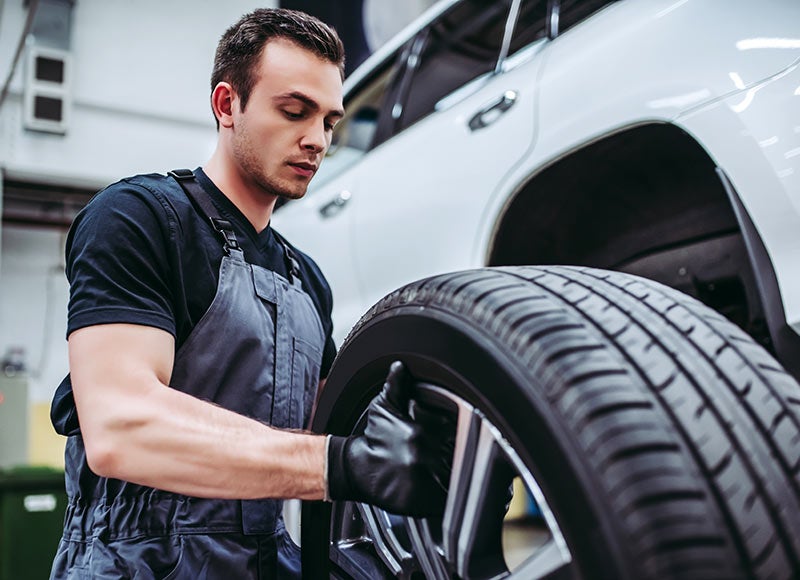
Your tires are a significant part of your vehicle. They account for how you steer, accelerate, and brake. They can lead you down the road in comfort, or they can become misaligned and worn, leading to terrible ride quality. Keeping track of tires is a good maintenance tip for your vehicle so that they do not cause any significant problems in the future. Knowing what tire rotation and tire alignment are and how often you should have your vehicle serviced is something you will achieve from reading this blog!
What is Tire Alignment?
Tire alignment is different from tire rotation. To outline the difference, tire alignment is the adjustment of the vehicle’s suspension. Having improper alignment can cause your wheels to wear out more quickly than they’re supposed to. It can also cause your steering wheel to pull to the side when driving straight. This can be extremely dangerous because your vehicle is trying to go in a direction you are not trying to go. This can be a significant safety concern and should be fixed promptly. Tire alignment or wheel alignment, as it is sometimes referred to, adjusts your vehicle’s steering system and alignment so that your vehicle can continue driving straight down the road! Wheel alignment does not do anything to your tires but instead the suspension on your vehicle. Technicians move the position of the wheels to resolve any tire alignment issues.
What is Tire Rotation?
Tire rotation involves moving the tires on your vehicle. Depending on whether your vehicle is a front-wheel-drive or a rear-wheel-drive, your tires are rotated in a different fashion. The purpose of rotating your tires is to prevent uneven wear on your wheels. This is because generally, vehicles are heavier in the front. The recommended length of travel before having your tires rotated is every 5,000 miles. By doing this, we’re also able to check your tires for any damage, air pressure, and tread depth so that you’re as safe as possible when traveling on the road.
How to tell you if need Tire Rotation
Having your tires rotated regularly can help you in many ways. Some benefits of tire rotation are:
- A comfortable drive
- Better fuel economy
- Enhanced safety
- Makes your tires last longer
You should be rotating your tires regularly in part of your preventative maintenance for your vehicle. Every six months is also a reasonable time to receive tire rotation. Some vehicle manufacturers could have different suggestions on the number of miles or time between a tire rotation, but the general rule is every 5,000 miles or six months. If you start noticing uneven wear between your tires, vehicle vibration, or pressure loss, you could need a tire rotation.
Learn About Your Vehicle’s Radiator
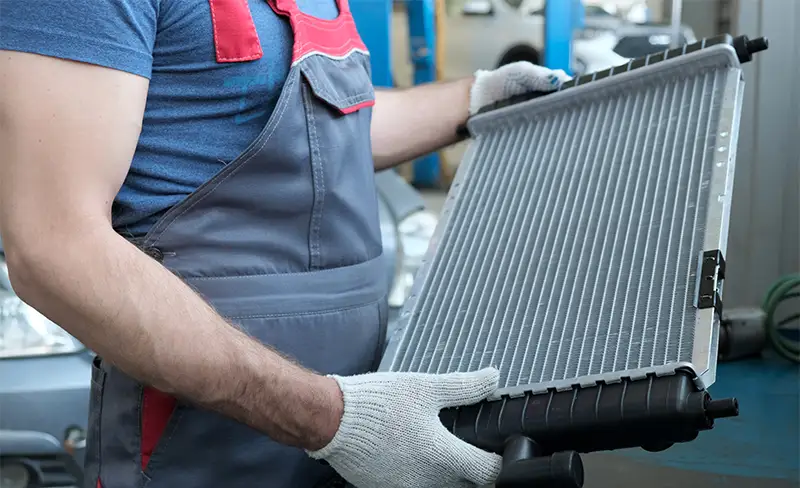
Your radiator is a critical part of your vehicle. Its primary role is to remove the heat from the engine to prevent overheating. The radiator is a commonly misunderstood component of your vehicle. There are many questions you could have regarding your radiator and radiator repair. This blog aims to answer those questions! However, it should be noted that if your vehicle is overheating, you should stop driving it immediately, or you risk blowing up the engine. If you’re experiencing symptoms that your radiator is damaged, then your vehicle is in danger; call an auto repair shop as soon as possible.
What is the radiator?
The radiator is one of the most crucial parts of the engine cooling system. This is because your vehicle is burning fuel to power your vehicle. This heat will build up over time and do a lot of damage to the engine if the heat is not removed. Besides the radiator, there are many components to the engine cooling system, like the exhaust system, which allows the heat to escape. However, the radiator is the most crucial component because it actively controls the engine’s high temperature. It achieves this by maintaining a constant temperature in the engine no matter the outside air temperature.
How does it work?
The radiator works by using a liquid called coolant. Coolant is pumped through the engine, where the coolant receives the heat from the engine and carries it away. When the hot liquid is returned to the radiator, air is blown across the liquid, cooling it down and exchanging heat with the outside air of the vehicle. This is achieved by passing the coolant through thin metal fins, allowing the air outside to flow easier through the radiator. So, in essence, the radiator cools the coolant, which then cools the engine.
What to do when it stops working
Your radiator is the most critical way your engine vents heat during operation. A malfunctioning radiator can cause significant engine damage. You can tell if your radiator has been damaged if you have a puddle of coolant under your vehicle in the morning. You can also tell if the temperature gauge shows you that the vehicle is running at a hotter temperature than usual. If you need radiator repair, make sure to call an auto repair shop to have this issue addressed immediately. Auto repair shops specialize in performing these repairs and can help you get back on the road. Radiator repair is not something you can wait on.
Purpose of Fuel Injection Cleaning
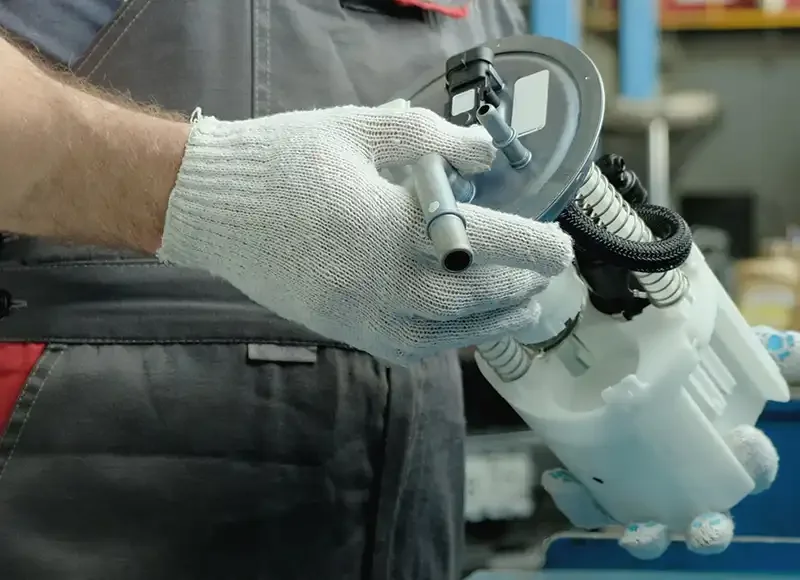
Fuel injection is where the fuel gets introduced into an internal combustion engine. The fuel system is one of the most critical parts of a vehicle; the engine cannot function without fuel. Therefore, keeping it maintained and in excellent condition makes sense to run efficiently and effectively. Your vehicle is constantly put under stress while you’re on the road, and fuel injectors clog when deposits build up over time. Eventually, the fuel injectors stop delivering the gas efficiently, and you’ll notice a decrease in your vehicle’s performance and fuel economy.
How it works
Fuel injection cleaning works by keeping your engine from corrosion and helps clean the entire fuel system. It helps clean the whole fuel system from harmful carbon buildup that can severely damage your vehicle’s performance and degrade the engine over time. Fuel is required to contain detergents that prevent carbon deposits and other harmful materials from entering the fuel system; however, depending on the quality of fuel in your vehicle, you could need a more abrasive fuel injection cleaning. Auto repair shops typically clean the throttle body, add an additive to the fuel tank, and then run a cleaner through the intake manifold. This process helps clean the fuel injection system, lubricate valves and injectors, and remove deposits from the throttle body and engine intake manifold. This also leaves residual cleaner in the engine to reduce the long-term build-up in a catalytic convertor.
Why It’s Important
Routine maintenance does not usually include a fuel injection cleaning, but that does not mean it is not essential. Your fuel system is comprised of three main components: a fuel filter, a fuel pump, and fuel injectors. It is critical that these work as efficiently as possible to ensure that fuel travels from the tank to your engine’s fuel injectors and then combusts appropriately with the correct fuel/air mixture. It is critical to have your fuel system cleaned routinely because:
- Extends engine life
- Maximizes miles per gallon (MPG)
- Reduces wear and tear
- Improves performance
- Fights corrosion and rust
Keeping up to date with the maintenance of your vehicle and having your fuel system cleaned will significantly extend the life and performance of your vehicle. That is why it is so important to have your fuel system cleaned.
Repair Indicators
Cleaning your fuel injectors is a frequently recommended service by repair shops. Many auto repair shops recommend having a fuel system cleaning annually to prevent poor fuel economy, power loss, rough idle, knocking/pinging, and increased emissions. These symptoms are indicators of needed repair. If your vehicle is experiencing these issues, it may be time for a fuel injection cleaning.
Vacuum Leak and Engine Danger

One of the most common problems to occur in the vacuum system is a leak. A vacuum leak refers to any leak that occurs between the engine and the mass airflow system. A leak can influence a vehicle’s fuel efficiency as well as potentially damage the engine. Upon discovering any symptoms that may indicate a vacuum leak, a certified mechanic must examine the situation to not risk the possibility of severe engine damage.
Why is a Vacuum Leak Dangerous?
When there is a vacuum leak, the air to enter the system is unmetered, which has a domino effect of possible miscalculations. If unmetered air is entering the system, the amount of air becomes higher than it should be. The mass airflow sensor measures the amount of the air and it will be inaccurate, which in turn results in a miscalculation of the amount of fuel injected causing your engine to run on lean, which refers to when the fuel in your ignition is either too little or high, in this case too high.
What is the Severity of Damage from Running on Lean?
When a vehicle is running on lean, the result can be severe engine damage. The reason for this is that when the engine is forced to run with insufficient gasoline or improper amount, friction between the engine’s moving components increases. An engine that is running on lean refers to the imbalance between the mixture of air to fuel. Vacuum leaks, as previously explained, transfer an improper amount of air which disturbs the vacuum system. It is important that the amount of fuel to air is balanced and consistent, because if out of whack and not repaired immediately, the cost of repair will increase significantly as a larger amount of engine parts can become damaged, and you are driving essentially with a broken engine.
What Signs Indicate a Vacuum Leak?
An obvious way your car will signify a vacuum leak will be through the check engine light. However, there are warning signs to look out for that may signify an issue before the light comes on which should not be taken lightly as the sooner a leak is indicated and repaired, the less severity of damage will potentially be done. Indicators of a vacuum leak may include:
- Audible Hissing from the Engine
- Difficulty in maintaining stable RPM when at Idle
- Ignition Mistimed
- Stalling of Engine when Stopping
- Fuel Economy Drop
- Engine Misfires
Upon recognizing any of these signs, it is important to visit your local trusted mechanic for a diagnosis. The indicators may very well indicate be a vacuum leak, but if not, all of these indicators are still abnormal and may indicate an even more severe issue, at which point scheduling an appointment with our shop as soon as possible provides the best bet at protecting the longevity of your vehicle and securing a safer driving experience. Also, aside from being essential for safety, a driver should want the correct fuel efficiency as to not waste money as well, so upon sensing there may be a vacuum leak, repairing it as promptly as detected is the most financially responsible decision at large.
Emission System Repairs

In order to register and legally and safely drive an automobile, it must be able to pass an annual state-mandated emissions test. This helps ensure your vehicle’s exhaust system doesn’t release fumes into the atmosphere with a higher concentration of waste chemicals than is considered safe. Plus, if your vehicle’s emission system isn’t functioning properly, its performance will suffer. It may have problems starting, idling or running properly, gas mileage will decrease, you may hear unusual noises, or your tailpipe will emit clouds of white or black foul-smelling smoke. Plus, dangerous, deadly, carbon monoxide may even seep into your vehicle’s cabin.
Understanding the Exhaust and Emission System
Your vehicle’s exhaust system consists of several important interconnected parts. All of them most work properly for the automobile to deliver optimal performance and reduce air pollution. Some key components of the emissions and exhaust systems of an automobile are:
· Exhaust Manifold
· Catalytic Converter
· Oxygen Sensor
· EGR Valve
· Muffler
· Flanges
· Gaskets
Interconnected pipes filter and route emissions away from the engine compartment, through the muffler and out the tailpipe. The catalytic converter filters out around 90% of the unburned fuel, acidic contaminant particles and dangerous gasses from the engine exhaust. The manifold and muffler cool the exhaust, muffle the loud expulsion noises and usher it out the rear of the vehicle. The flanges and gaskets join the exhaust system components together and minimize the leakage of the dangerous gasses released as the internal combustion engine works to power the automobile.
Service the Components Regularly
Don’t wait for your check engine light to go on or you are about to do your annual emissions test before having your vehicle’s exhaust system serviced. For your automobile to deliver peak performance, it’s important to have the exhaust system serviced regularly by properly trained auto repair technicians using the right equipment, tools and methods. They will identify and address minor problems before they become major, complex, expensive, ones. Having your exhaust and emissions system periodically serviced and repaired can help your vehicle be safer, perform better and last longer.
The Importance of Preventative Maintenance
The engine of an automobile produces toxic chemical as it works to power the vehicle. Proper exhaust system maintenance helps prevent unsafe amounts of dangerous contaminants from polluting the atmosphere. Plus, it protects the occupants of the vehicle from being overwhelmed by toxic fumes while inside it. Automobile emissions have acidic elements that can corrode and damage muffler pipes and release unfiltered, toxic, fumes into the vehicle and the atmosphere. Preventative maintenance services on the exhaust system can help stop these things from happening.
Signs Of Exhaust System Problems
Long before your check engine light comes on, your automobile may begin to give you signs that there is a problem with the exhaust and emission systems. One of the first signs is a noticeable decrease in the amount of mileage you get when you fill your tank. This is often combined with the vehicle’s operation beginning to get rougher than usual. Unusual noises and thick smoke pouring out of your tailpipe are other signs of exhaust system problems. If you begin to smell exhaust fumes when you are inside your vehicle, it has an exhaust system leak that must be addressed right away or it will be unsafe to drive your vehicle.
Get Quality Auto Repair
Shade tree mechanics can sometimes add chemicals to your vehicle’s system and use other tricks to temporarily improve the way your vehicle functions. These tricks mask the real problem and can lead to further damage to your automobile. If you suspect your vehicle has exhaust system problems, you should immediately take it to a good state-licensed, automobile repair shop. They will have the properly trained technicians, most accurate and effective diagnostic technology, the right tools and equipment and high-quality replacement parts. This will enable them to take care of your exhaust system problems efficiently and effectively and have your vehicle running well and able to pass the emissions test.
Emission Control: A Two-Part Process.
The emission control system in your automobile uses a two-part process to keep toxic fumes out of your vehicle and the atmosphere. The first part of the process is to limit and control how much fuel vapor escapes from the gas tank. The second part of the process is reintroducing some of the fuel vapor into the intake path so it can be burned again in another combustion sequence. This capturing and reusing of fuel vapor improves gas mileage and keeps the emissions released into the atmosphere cleaner. Regular servicing by well-trained, experienced, technicians helps enhance the process.
All Parts Must Function Properly
When gasoline is pumped into a fuel tank, lots of air goes in as well. If all the components of the emission control system are not functioning properly, large amounts of fuel vapors escape into the atmosphere, become some of the greenhouse gasses that destroys the ozone layer and leads to environmental problems. Your vehicle’s Evaporative Emission Control System takes the fumes that escape from the gas tank and reintroduce them into the fuel mixture through the purge solenoid to be burnt, absorb some into a charcoal filled evaporation canister, or vents some of it through the evaporation vent valve into the air. For this complex system to function properly, all its parts must be in good working order.
Three Common Emission System Problems
There are a number of problems that can develop in the emission system that can impact your vehicle’s function and cause the check-engine light to come on. Three of the most common ones are:
1. A Faulty Purge Solenoid (Vent Valve)
This valve can become stuck open or closed because of too much or too little flow or a leak in the system.
2. EGR Valve Issues
The Exhaust Gas Recirculation (EGR) system reduces the amount of ‘bad’ air that passes through the catalytic converter. The EGR valve controls the amount of spent gas that flows back through the intake system. The EGR valve can sometimes get stuck in the open or closed position and lead to stalling or rough idling of the vehicle.
3. Excessive Carbon Buildup
Excessive amounts of carbon can build up in the passages from the exhaust manifold through which the exhaust gasses pass. Those passages must be thoroughly cleaned periodically to keep the system functioning properly.
Emission System Repairs
Like any other type of auto repair, effective emission system repairs requires the services of a well-trained, experienced, mechanic and a shop with the right tools and equipment. A good mechanic can quickly and accurately evaluate and repair your vehicle’s exhaust system problems. This can prevent a minor leak or other small problem from causing a critical major component failure that will be expensive to repair, make your vehicle spray harmful contaminants into the atmosphere, cause your vehicle to fail its emissions test and prevent you from being able to renew your vehicle registration.
The Right Mechanic
The right mechanics can repair the exhaust system or handle any other type of automotive repair your vehicle needs. The key is to have your vehicle regularly serviced, maintained and repaired by specially trained technicians at an automotive repair shop you trust that has all the appropriate diagnostic technology, tools and equipment necessary to perform the high-quality emission system repairs your vehicle needs. Doing so will help it to not only pass the emissions test but deliver optimal performance for years to come.
What Is The Transfer Case In Your Car?

A car transfer case is the place where power in a four-wheel-drive car is transferred to the back wheels. The majority of cars have front-wheel drive, but a transfer case is needed to send power to the back wheels. The case itself is the place where the prop shaft connects to both the back wheels and the engine.
When you have the option to switch between two-wheel and four-wheel drive, you could put even more stress on the transfer case because it is turning on and off. There are a few tips below that will help you keep your transfer cases in good shape.
How Does the Transfer Case Work?
The transfer case accepts the prop shaft, and the prop shaft delivers power from the engine. However, the transfer case needs to help turn the back wheels when you are in four-wheel drive. This means that the transfer case is both helping the car move and helping the four-wheel-drive system stay aligned.
Most of the parts of your car do not have multiple jobs to do, and that is why transfer cases can be so delicate. The transfer case is affected by how fast you go, any bumps in the road, any misalignment by the prop shaft, and the length of service.
The transfer case must be oiled regularly, and it must have a fluid inside the casing to ensure that you do not allow the gears to grind on one another. Plus, the case needs to be enclosed so that debris from the road cannot damage the gears inside the case.
What Is the Most Common Transfer Case Problems?
The most common problems are grinding in the gears, a bad sound coming from the car when you change gears, or reduced performance. You may notice smoke coming from the back of the vehicle that might come from a bad transfer case. Plus, you might hear a constant whirring noise that is caused by a lack of alignment inside the casing.
Plus, the transfer case might be cracked or damaged so that fluid is leaking out. Debris could get inside the case, and that could cause even worse performance. The transfer case may run out of fluid, or the gears may be damaged when you run over a really large bump in the road. Plus, the back wheels might fall out of alignment over time. Stress on the case could cause damage to the wheels, or the back wheels may not perform the way that they should.
Can You Replace Your Transfer Case?
Yes, you can replace a bad transfer case, but you should ask your mechanic if it can be repaired for a fair price. There are times when you bring the transfer case back to normal with a simple repair, but the repairs may be so extensive that you need to replace the transfer case.
You can buy aftermarket parts for the car, or you could get a factory transfer case for the car. Ask your mechanic what the most economical option is. This is a complex repair, and you need to ask the mechanic how long it will take them to get the job done.
Plus, you should try not to drive with a bad transfer case even though you cannot get the repair done. If you can take your car out of four-wheel-drive, you should do so. If the car is always in all-wheel-drive, you should leave the car with your mechanic until they can complete the repair.
How Do You Extend The Life Of Your Transfer Case?
You can extend the life of your transfer case by making sure that it gets the necessary milestone services that are laid out in the owner’s manual. The owner’s manual lets you know when you need to have the transfer case serviced, and the manual explains what needs to be done to the device on your car.
Most people come in for a milestone at 30,000, 60,000, and 90,000 miles. Once you get over 100,000 miles, you need to be a bit more careful with your transfer case. You should continue the milestone services every 30,000 miles, and you should make sure that you bring the car in for service any time you think the performance has been compromised.
As the car gets older, you need to be careful with things like transfer case fluid and shifting very hard. Plus, any off-road driving that you do should be kept to a minimum because bumps in the road could cause even more damage to your transfer case.
How Can You Prevent Damage to Your Transfer Case?
You can prevent damage to your car transfer case by using the following tips:
· Take the car out of four-wheel drive whenever you can. There is no need to drive with four wheels if conditions are perfect. If you have all-wheel drive, you need to make sure that you do not use the programmed traction control settings unless you absolutely need them
· Ask your mechanic to check the transfer box even when they are doing an oil change. You could repair tiny problems with the transfer case before they get out of hand.
· Go in for the milestone services that are prescribed in the owner’s manual
· Try to shift gears as gently as possible
· If you have an automatic transmission, you need to make sure that you do not use too much power on the highway
· You should try to keep off-road driving to minimum
· If you are driving off-road often, you need to have the transfer box checked more often than not
The tips listed above will ensure that your transfer case stays in good condition. There are a lot of drivers who assume that the transfer case can withstand all off-road driving. This is not true. The transfer case can only withstand so much punishment before the interior mechanisms start breaking.
You should try to shift gently because you do not want to put more stress on the transfer box when you change speeds. Plus, you need to make sure that you do not overuse power on the highway. You could burn out your transfer box when you do not even need the back wheels.
Lastly, you should turn off four-wheel-drive whenever possible. You do not want to use this system too much, and you do not want to force the transfer case to do work that is not needed. There are a lot of people who feel like four-wheel-drive is a novelty, but it is not a novelty that you can use every day without wearing out the transfer case.
Conclusion
The tips above will help you manage any four-wheel-drive vehicle. The transfer case in the car gives you power in the back wheels, but that does not mean that the transfer case is indestructible. You need to be careful with the car when you are driving on normal roads or highway, and you should try to keep your off-road driving to a minimum. Take your car in for regular oil changes where the mechanic can check the transfer case, and make sure that you have your 30k/60k/90k milestone services done to keep the gears and fluid in the transfer case in good condition.
Connect with us


- August 2024
- July 2024
- June 2024
- May 2024
- April 2024
- March 2024
- February 2024
- January 2024
- December 2023
- November 2023
- October 2023
- September 2023
- August 2023
- July 2023
- June 2023
- May 2023
- April 2023
- March 2023
- February 2023
- January 2023
- December 2022
- November 2022
- October 2022
- September 2022
- August 2022
- July 2022
- June 2022
- May 2022
- April 2022
- March 2022
- February 2022
- January 2022
- December 2021
- November 2021
- October 2021
- September 2021
- August 2021
- July 2021
- June 2021
- May 2021
- April 2021
- March 2021
- February 2021
- January 2021
- December 2020
- November 2020
- October 2020
- September 2020
- August 2020
- July 2020
- June 2020
- May 2020
- April 2020
- March 2020
- February 2020
- January 2020
- December 2019
- November 2019
- October 2019