

The Fluids that Keep Your Car Running
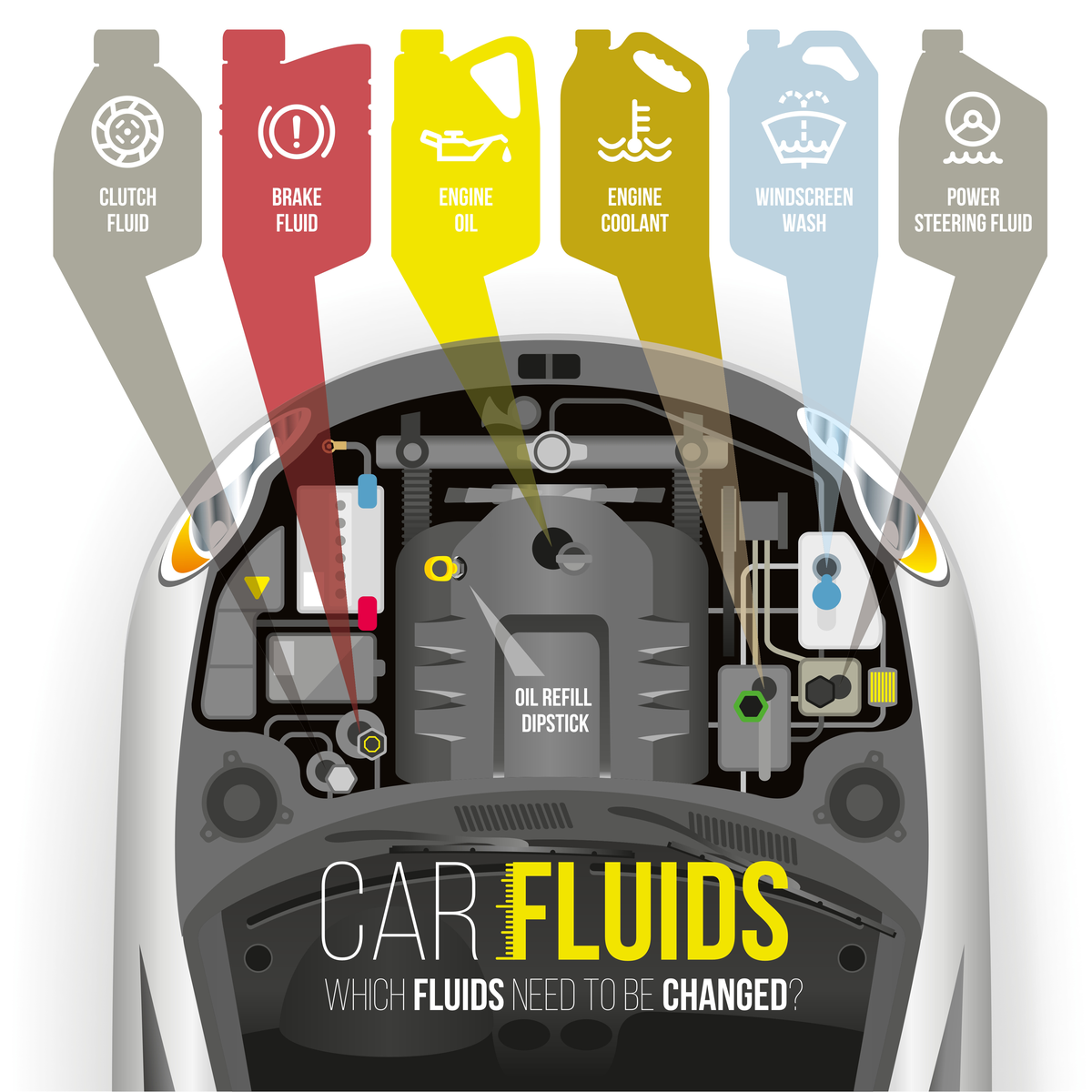
Your car is an important part of daily life. It’s your workhorse and should be maintained properly to stay that way. Besides gasoline, there are several fluids in your car that perform different functions to keep your car running in prime condition. The six main fluids, when checked and replaced regularly, are vital to your car’s efficiency, longevity, and performance.
Different types of fluids for your car
1. Brake Fluid
It’s obvious that the importance of highly functioning brakes is essential to road safety. A vehicle’s brake system needs brake fluid to function properly. The fluid level should be towards the top and should be a light brown or yellow color. If it looks dark or muddy, it should be replaced.
2. Coolant
Coolant (or antifreeze) is usually a bright neon yellow or green color and serves a dual purpose. The radiator inside of your car keeps your car from overheating, which is all made possible by the coolant. The second purpose of the coolant is to provide all passengers with cool air conditioning when outside temperatures are too high and/or uncomfortable.
3. Motor/Engine Oil
Usually regarded as the most important fluid for your car after gasoline, motor oil keeps all your car’s engine parts lubricated and running efficiently. It is usually an amber or yellow color and should be clear. If you the motor oil is dark, thick, or has particles in it, it is essential that you have your motor oil changed, otherwise your vehicle risks having a major issue down the line.
4. Power Steering Fluid
If you drive a modern car, chances are, you have power steering. To keep your vehicle’s steering adaptable and responsive, make sure your power steering fluid levels are checked and in good shape.
5. Transmission Fluid
Your car’s transmission is made up of gears, clutches, and valves that allow you to shift gears. Transmission fluid keeps everything lubricated in the transmission allowing you to seamlessly go from park to reverse to drive, and back again in any order.
6. Windshield Washer Fluid
Probably the least “vital” of all the fluids, windshield washer fluid may not help your car’s performance as vitally, but it is important for the driver to maintain visibility and ensure the safety of all passengers and other motorists. This fluid is specially formulated to get rid of all the bugs, dirt, and grime that can accumulate on your car’s windshield.
Fluid Changing Schedule
You should not ignore changing or refilling your vehicle’s fluids. Here is a quick guide on when to check to replace the fluids in most cars:
Every 3 years or 30,000 miles (whichever comes first)
• Brake Fluid
• Coolant
• Power Steering Fluid
• Transmission Fluid
Every 5,000 miles
• Motor/Engine Oil
As needed
• Windshield Washer Fluid
Need to replace your fluids?
Head down to your local auto repair shop for all your vehicle maintenance and fluid replacement needs. Our certified auto repair technicians have serviced thousands of vehicles and are experts in fluid replacement. Call us today to schedule an appointment!
Vehicle Sanitization is Essential
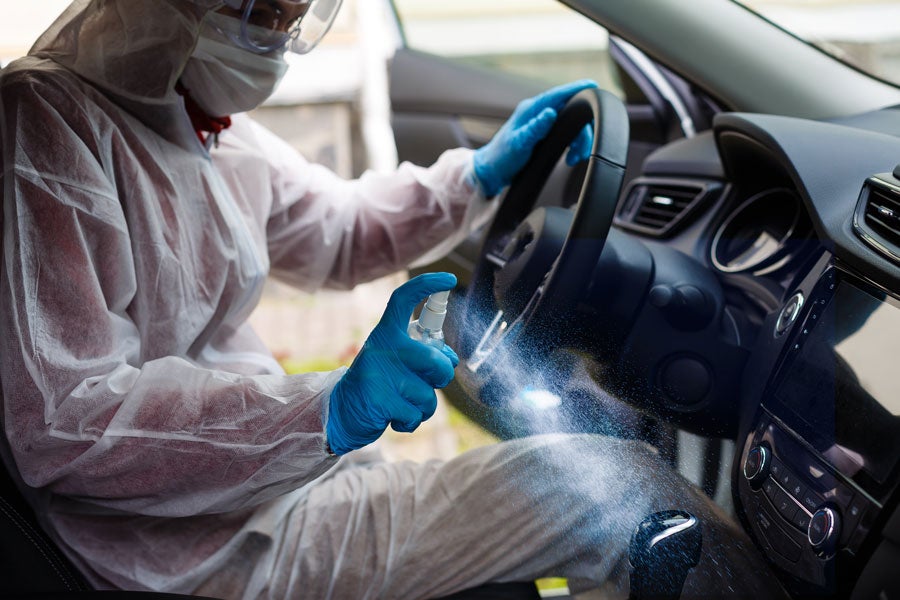
We spend so much time in our vehicles, it is no wonder they can harbor germs and that we must be vigilant in cleaning high touch points. While vehicle sanitization has always been a good idea, it has become an essential practice due to the COVID-19 pandemic. There is a lot that vehicle repair shops and vehicle owners can do together as a community to prevent the spread of germs. Vehicles often have many different surfaces in their interior and you should consider them all when sanitizing for the safety of your family and loved ones. Going the extra mile now and in the future will ensure you have done all you can to protect from germs.
Vehicle Owner Tips for Sanitizing all Prominent Touch Points
- Sanitize most-touched spots in the interior of the vehicle
- Be sure to sanitize the radio, cupholders, glove box and seatbelts- all highly touched surfaces!
- Don’t forget your dashboard, sun visors and all buttons
- Take a close look to find what spots look the dirtiest or that have debris
- Wring out your rag completely before sanitizing to avoid moisture buildup
- Consider any high tough points for passengers and children
- If you are someone who uses their trunk often to store groceries, workout clothes, recreational gear or other items, be sure and sanitize
As you make your way through the cockpit, meticulously cleaning, be sure and consider your arm rest and center console. Before moving down the rear, be sure and give the door panels a good cleaning as well. The foundation of cleaning has always been the adequate use of soap and water. This practice is good throughout the year but is imperative now that we are in a pandemic. Many of us clean the steering wheel, dirty door handle, interior carpet and windshield- but we must also consider all locations listed above and get down to the nitty gritty. This will not take much more time than you already took cleaning your vehicle before.
Choose a Vehicle Repair Shop that Takes Sanitization Seriously
Be sure when you take your vehicle in for routine maintenance or needed repair, that they are doing their part in the fight against germs. All staff and service should have procedures in place for protecting their community and their workers. Don’t be shy about calling in to ask what your local vehicle repair shop is doing to protect their community. At this point, we all know cleanliness and sanitization is key and they should not have a problem going over their methods.
Our team of mechanics and all staff members take the necessary safety sanitation steps throughout our shop seriously. Every vehicle we work on is treated with care and with your well-being in mind. Your safety matters to us! Give us a call for more information on how our vehicle repair shop is fighting germs.

People have long associated the arrival of spring as the sign to tidy up. While we sort through and scrub our homes, it is easy to forget to direct that same energy towards auto repair. The seasons affect us all, cars included, and a visit to your local mechanic could make or break your springtime jubilee.
Breathe In, Breathe Out
If you own a home or an air conditioner, there is a strong chance you have had to deal with an air filter replacement. These filters function by extracting harmful debris and contaminants from our environments, substances that would otherwise reduce air quality and airflow. When it comes to auto repair, three filters actively sift impurities:
· Fuel Filters acts as a debris screen in the fuel line, ensuring your fuel is free of contaminants.
· Cabin Air Filters prevent harmful particles like smoke, smog, and pollen from entering the passenger cabin.
· Lastly, there are Engine Air Filters, which protect your engine cylinders from dirt and debris.
When and Why
With the passage of time, all filters lose efficacy as they are laden with dirt and contaminants. As a rule, air filter replacement should happen once a year or every 12,000 miles, whichever comes first. If not, we run the risk of a performance drop or even a major component failure. Each filter shows symptoms of wearing down, it is up to us (or our favorite mechanic) to read these signs and act accordingly.
Signs and Symptoms
Engine Air Filters
These show several signs of wear and tear: symptoms such as reduced power, low throttle response, weaker acceleration, and an overall increase in engine wear and tear.
Cabin Filters
If you notice that the air coming from your AC vents is weak, or a general decrease in cabin air quality, your cabin filter is likely in need of replacement. This filter guards your nose, removing all the mold spores, dust, pollen etc. that would normally find their way inside.
Fuel Filters
A dirty fuel filter reveals itself by reducing fuel economy, and causing abnormal or sluggish engine behavior.
Although easily forgotten, a well-maintained filter is crucial not only for the health of our car, but for our personal safety and well-being. By communicating with your local mechanic and staying on top of routine repairs, we can ensure a clean spring and a clear summer.
Advantages of Using a Windshield Cover
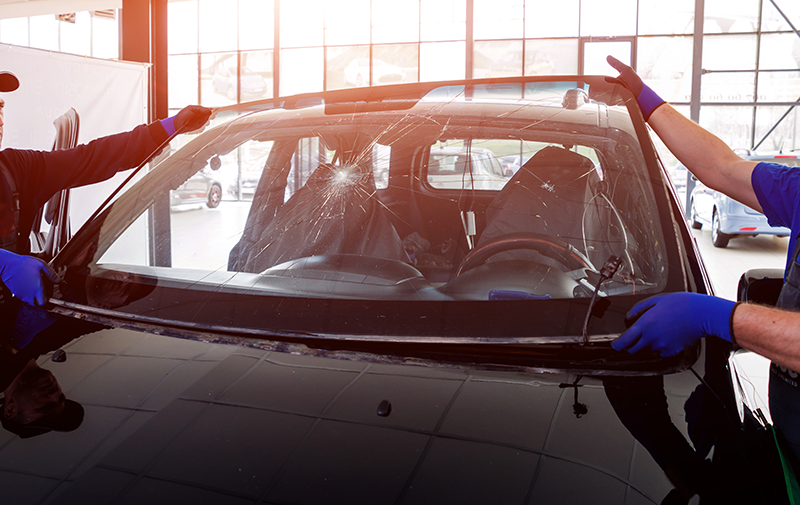
There are many accessories that can make owning a car just a bit nicer. One of the most essential is a windshield cover. While windshields are durable, they are not invulnerable. A broken windshield can cause many problems, including loss of life. Protecting your windshield should be as important as ensuring that your car has enough oil. Here are a few advantages that you can experience when you choose to use a windshield cover.
Cut Down on Repairs
Perhaps the biggest advantage that you will experience when you use a windshield cover is that it will cut down on usual repairs that you take your car in to for normally. Most car owners visit an auto repair shop for the following services:
· Windshield repair
· Tire change
· Oil change
· Rear or front end collisions
While repairing a windshield may not seem like that much, if you are in the shop frequently for a windshield repair, those costs will start to add up. It is important that you use a cover to keep your windshield protected just so you can also protect your wallet.
Save Lives
When your windshield is broken, it can obscure your vision. It may even distract you. One of the reasons why you should use a windshield cover is simply because it can save your life and the lives of the passengers inside your car. Do not let a crack that extends across the entire windshield distract you. Do not let it obscure your vision.
Visit an auto repair shop and have your windshield fixed, then invest in a cover to keep it protected in the future. It is not worth your life.
Seasonal Damage
The seasons also play a role in the health of your windshield. When you use a cover, you are protecting it from the following damages brought on through the seasons.
· Fall – During the Fall, your car is subjected to a series of impacts. Sticks will be falling with leaves and possibly striking your car. Turbulent storms may even cause hail to fall and piece your windshield. A cover can keep it safe.
· Winter -The season of winter can be a serious problem for the health of your car. Salt on the road can be easily picked up by cars in front of you and flung backward. When it strikes your windshield, it may only make a small chip or crack. However, the ice and cold will quickly extend that crack further.
· Spring- Just like the fall season, spring also brings inclement and violent weather. Foliage, hail, and other elements can be brought against your car with strong winds. The cover can help preserve it from impact damage.
· Summer – Along with the occasional storm, you will also have to keep your windshield safe from bird droppings. A cover will limit the number of times you visit a car wash.
Get a Cover Today
Protect your windshield and car from the weather and debris by getting a cover today.
Car Battery Inspection
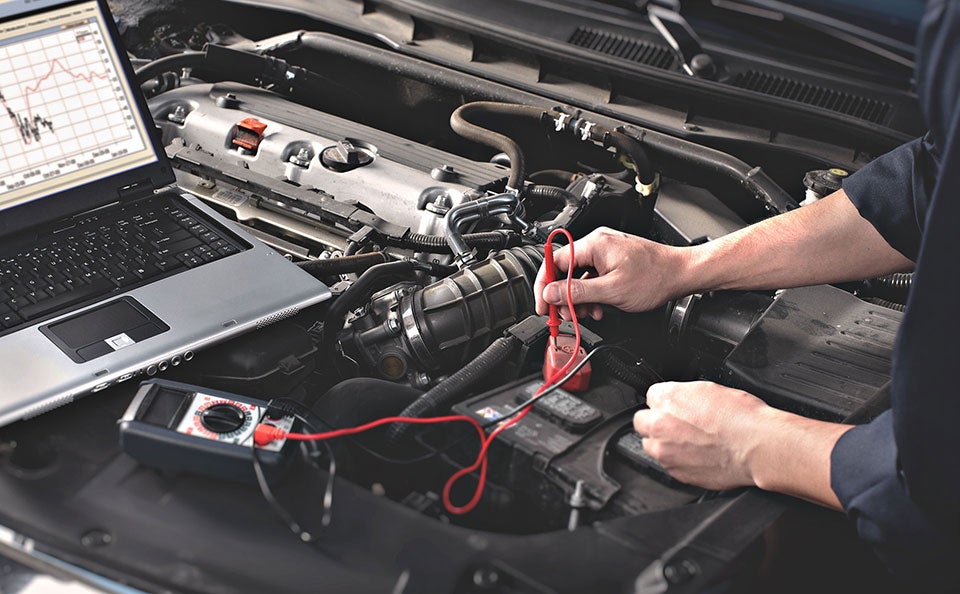
If you want to keep your car safe and functional, you need to have the car battery inspected regularly. A car battery inspection ensures that your battery can hold the charge and start your car when you need it to. A simple inspection now may prevent an expensive car electrical repair bill. If you notice that the cables to your batteries are cracked or the terminals are corroded, the time has come for you to get your vehicle serviced by a mechanic.
Understanding Your Car Battery
Understanding the parts that make up your car battery is key to understanding what your mechanic will do during an effective inspection of your battery. Your battery is enclosed in a case. This case protects the battery from vibration and impact.
What Is Inside the Battery?
When you look on the top lid, you will see two terminals. One is positive, and one is negative. When looking inside the battery, you will find a mixture of sulfuric acid and water. You will also see positive and negative plates that are divided by a polyethylene separator. The plates are stacked into elements. There is a cast on strap connecting the elements to the terminal. This creates a solid electrical connection.
Leave the Inspection Work to Professionals
We do not advise you to open a battery case. We just wanted to give you an understanding of what is inside of it. This will help you understand what we are doing as we complete your car battery inspection. Leave the inspection work to professionals.
What Happens during an Automobile Battery Inspection?
An inspection of the battery only takes a few minutes. However, the peace of mind you will drive away with knowing that your battery is functioning well is priceless.
- We will examine the battery case. During this part of the check, we are looking for corrosion and will remove dust and debris. If we find cracks or leakage from the top of the battery case, we may recommend that you replace the battery.
- Next, we will look at the brackets. Again, we are looking for excessive corrosion. If found, it may show the battery needs to be replaced. If your battery is bouncing around as you drive, it will have a shorter life and could damage other parts of your vehicle.
- Now, we will review the battery terminals and posts and check if there is corrosion. If possible, our technicians will use a special cleaning solution to remove the corrosion as opposed to you needing to replace the battery.
- We will look for any loose cables and tighten them.
- We will inspect the fan belt to make sure it is tight. If your fan belt is loose, it can impede your battery’s ability to recharge. If the fan belt is damaged or cracked, we may recommend that you replace it.
Don’t Ignore Possible Battery Issues
Don’t ignore battery issues. Get your battery checked according to the manufacturer’s recommendations. If you don’t get your battery checked regularly, you will find yourself making an expensive car electrical repair or stranded at the worst time and in the worst place.
Fuel Efficiency Costly Actions To Avoid

Fuel Efficiency is how long you can travel on the amount of fuel your vehicle has, otherwise referred to as miles per gallon. Fuel Efficiency is taken into consideration especially when shopping for a vehicle due to the fact gasoline is one of the most costly and frequent investments car owners undertake. No matter the vehicle, there are several actions to take to maximize the miles you get for the gallons you paid for. If you want to save money at the pump and reduce the need for vehicle repairs, it is essential to understand what car components can affect fuel efficiency and what driver choices you may be making to affect this. Fuel efficiency is a subject matter of high capacity due to the fact gas prices are never consistent and especially the need to keep carbon footprints at a minimum.
Potential Necessary Vehicle Repairs needed to maximize fuel efficiency:
- The type of motor oil being used
- Incorrect Tire Pressure
- Leaking Spark Plugs
- Broken Air Filters
- Broken Fuel Injectors
An issue with any one of these car components should be repaired as they affect how your vehicle receives or uses its fuel. If you are using a motor oil that does not cause a high enough friction reduction, gas mileage is affected. This can be an inexpensive switch that will be repaid in gas saved. Similarly, changing tire pressure is an inexpensive repair that commonly affects fuel efficiency. Misfiring spark plugs mean combustion in an engine does not take place. These possible repairs affect gas mileage in various ways. Spark plugs spark combustion in an engine. In regard to air filters, the issue is when they get clogged. Oxygen sensors assist in maintaining the correct balance mix of air and fuel so they need to be clean to permit an engine’s maximum performance. Lastly, leaking fuel injectors translates into less fuel injected into the engine.
In addition to inexpensive car repairs that may be necessary to maximize fuel efficiency, there are completely controlled factors by the driver that can influence this. Quick or frequently fluctuating acceleration can lead to overly increased fuel consumption. Revving your engine or using it when unnecessary such as blasting the AC nonstop will also consume your gasoline at an avoidably higher rate.
Step to Take
Visit your local mechanic if you believe one of the listed car components to be faulty or have noticed your gasoline is not lasting you so a vehicle inspection can be conducted to discover the source of the problem. This will save you time and money at the pump in the long run, decrease your carbon footprint as you will be wasting less gas, and reduce the risk the repairs escalate and cause serious damage to your vehicle.
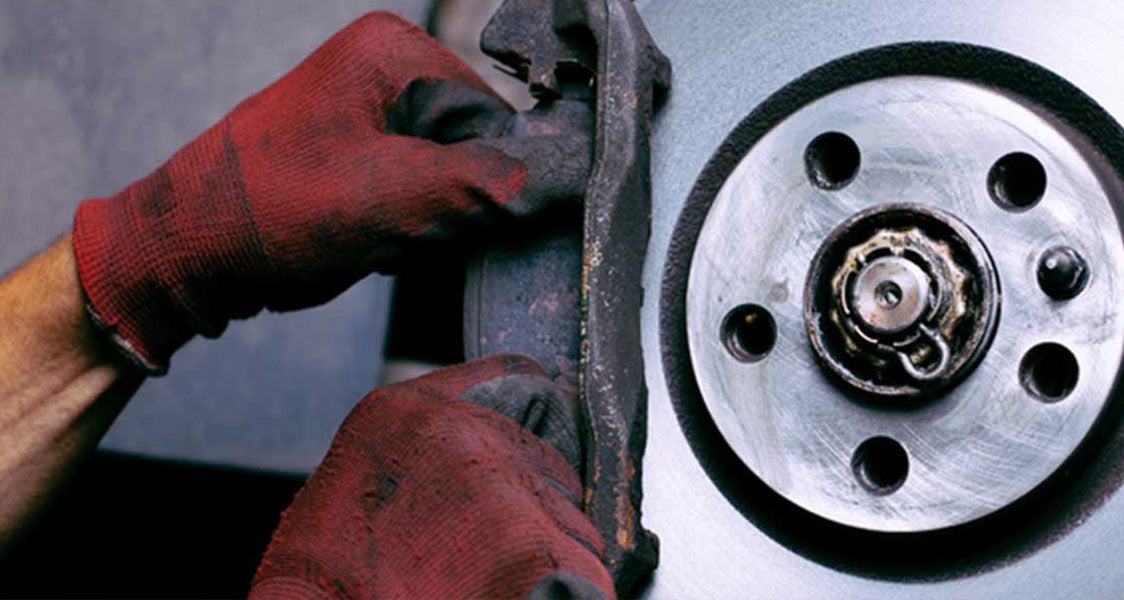
Maintenance and repair to your emergency and parking brake is necessary for your safety and vehicle health. Each system within a vehicle is important but the brakes are considered top of the list. The name for a specific brake, like any vehicle part, is determined by the manufacturer. All brakes are important and should be maintained up to the vehicles’ specifications.
Types of Brakes
- Parking Brake: A brake that is controlled electronically or that is within a vehicle that houses a manual transmission. This is because it is used to keep a car in place any time it is parked. Manual vehicles remain in neutral unless they are left in gear when parked, so the parking brake is needed to keep them in place. Automatic cars benefit from the use of a parking brake as well. This brake protects the parking pawl in the transmission that holds the car in place when the transmission is in Park.
- Emergency Brake: This term, though popular, is a bit misleading. The auxiliary brake may be used in an emergency, it still makes the most sense for parking. In an effort to not confuse customers who already put the car in park when they park their car, we typically call this an “emergency brake” instead.
- Hand Brake: If you drive a performance or race vehicle, this part is called a handbrake, mainly because the brake locks up the rear wheels. This allows the driver to slide their car around corners with fairly accurate precision. For the record, this is not a safe practice and should not be attempted on public roads.
Professional Brake Repair
Squeaky, grinding or whistling brakes should be inspected immediately. It goes without saying that safety comes first or any vehicle, big or small. Drivers can easily check their maintenance requirements in their user manual. Each car manufacturer has different milestones when it comes to brake repair and inspection.
Our mechanics specialize in brakes and can change your brake pads, brake fluid or do a full overhaul if needed. Remember, regardless of your vehicle, brake maintenance should be a top priority. You’ll want to have your brakes checked early and often. This will help you to avoid more costly repairs or worse, brake replacement, down the road. Our team of brake experts will provide you with quality, prompt auto repair service. Even if you just suspect something doesn’t feel right, we are happy to have a look under the hood!
Why Defensive Driving Matters
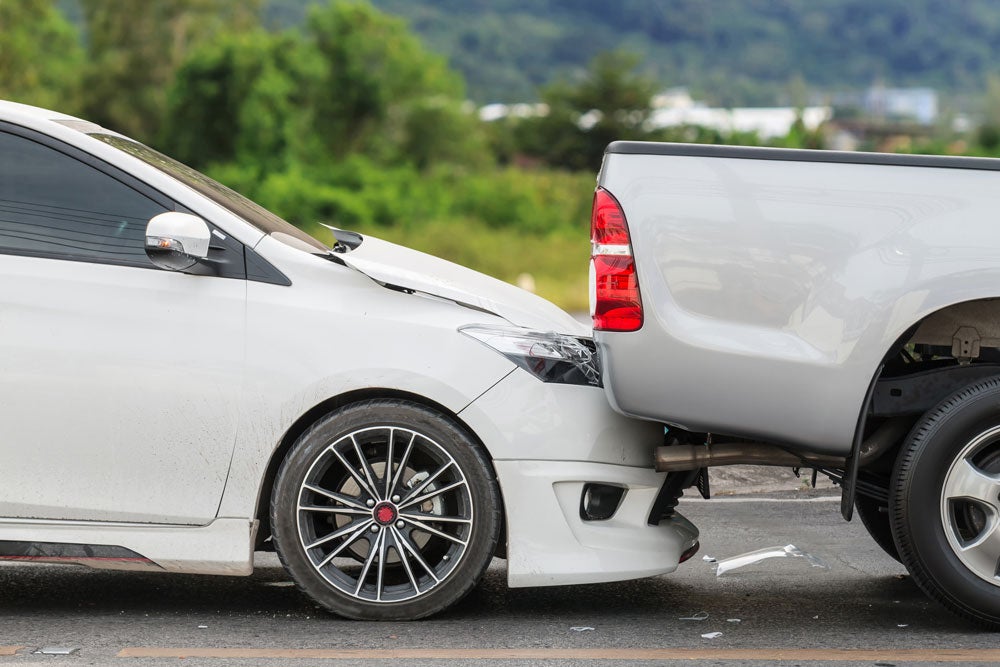
Car safety begins and ends with you. You can’t control any of the other drivers on the road with you. However, you can control how you react to them. Whether you’re speeding or driving recklessly, you’re going to put a lot of wear and tear on your car. You’ll need to see a mechanic a lot faster by the continuous use of the brakes than you would if you were driving safely. You’re also more likely to need auto repair because of an accident due to your reckless driving. Here are a few tips on how you can be more car aware and how to drive defensively.
1. Always Check Lanes
One way that you can start using car safety is to check your lanes. While a lot of cars have lane assistance and lane detection systems, some still don’t. Even those that do have this sophisticated technology can sometimes be wrong. Checking the lanes yourself is a good practice to use.
Whether you’re changing lines, merging onto the highway, or just driving the highway, you should regularly check the lane. You may find someone speeding down the lane next to you and driving recklessly. In the event that they decide to swerve on you, you can react accordingly because you were aware that they were in the lane next to you.
This might save you from needing to stop by an auto repair shop for damage caused by sideswiping.
2. Wait at Stop Signs/Lights
Another tip for driving defensively is to wait a few moments more at a stop sign or a stoplight. Sometimes you’ll find a driver who is attempting to speed through a yellow light that turns red right as they cross the road. If you had sped your car up the moment the light turned green, then there’s a chance that you could have hit one another.
You shouldn’t trust that people are going to stop when they’re supposed to. Instead, take the extra few moments to ensure everyone has stopped before driving forward.
Stop Sign/Light Defensive Driving
Here’s a breakdown of how you should treat a stoplight or stop sign.
- Stop at Light/Sign
- Wait for Light to Turn Green
- Once green, check for cars stopping or speeding up
- Check for pedestrians and bikes
- Cross once everyone has stopped
3. Defensively Turning
If you have to turn left, then you’re ripe for another visit to the mechanic. Whether you’re turning left, or someone is attempting to turn left on the other side of the road, you could have a problem. Not everyone waits for a left turn signal. You should always hesitate before turning left or driving forward if someone is turning left to ensure they don’t step on the gas to turn before anyone else.
Be Aware and Safe
Repairs can be expensive. Defensively driving and being car aware can help keep you and your car safe. Incorporate these tips to improve your driving and increase your safety.
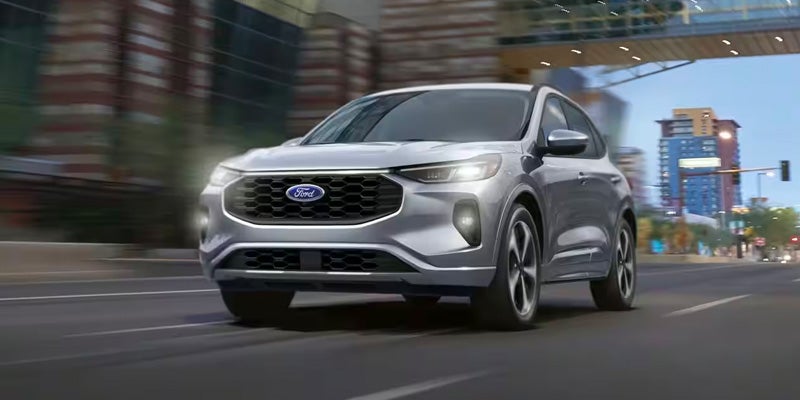
Drive axles are axles on engine powered vehicles that transfer energy from the engine and torque from the transmission on to the front, rear or all the wheels. Drive axles respond to the input they receive from the steering wheel to determine how power will be distributed to the wheels. Drive axels run from the differential into the wheels and are an essential for any automobile to be able it to move. Several other systems interface and interconnect with drive axles to power them and control their movement
A Complex Piece Of Equipment
Too many, drive axles seem like a simple, solid object. In actuality, it’s a complex piece of equipment that’s made up of two half axles connected to the differential and universal joints. Drive axles have several important parts. Those parts include:
- Axle
- Constant Velocity (CV) Joints
- Drive Shaft
- Differential
- Universal Joint
- Axle Housing
What These Drive Axle Parts Do
1. Axle
The axle bears the weight of the vehicle, its cargo and its passengers. It has to withstand the strong forces generated by driving and braking. The axle also facilitates steering and absorbs some of the shock when driving on rough roads.
2. Constant Velocity (CV) Joints
The CV joints help keeping a vehicle’s body balanced and allowing the wheels to move freely.
3. Drive Shaft
Drive shafts in automobiles allows torque and energy produced by the drive train to be transferred to the wheels and other parts of the automobile. In rear-wheel drive and four-wheel drive vehicles they enable the engine to power the rear axle.
4. Differential
The differential aims power coming from the engine at the wheels, slows the transmissions rotational speed before it’s transferred to the wheels and transmits power to the wheels and enables the wheels to rotate at different rates of speed.
5. Universal Joint
The universal joint helps the driveshaft transfer power flowing from the transmission and move it to the differential.
6. Axle Housing
The axle housing helps protect the axle and enables it to operate as efficiently as possible.
Drive Axle Problem
If the drive axle breaks or is not functioning properly the vehicle can’t move properly. Many people wonder if it’s safe to drive their automobile if it’s having drive axle problems. Most automobile experts agree it is not. Driving a vehicle that has drive axle problems is extremely dangerous. If the drive axle breaks when someone is driving along, it can cause the vehicle’s occupants to suffer serious injuries and do major damage to the automobile that are difficult and expensive to repair.
Common Drive Axle Problems
The constant velocity (CV) joint is a part of the drive axle that’s very susceptible to a wide range of problems. Some of the most common ones are:
Poor Lubrication
The axle joint that’s in the CV axle assembly needs proper lubrication to function efficiently. When the joints are properly greased they provide the drive axle with the flexibility it needs to be able to flex and move depending on the road conditions. When the CV joints are not properly lubricated, it exposes the drive axle to lots of friction and high levels of stress. This increases the chances the drive axle will break and the vehicle won’t be able to move.
Worn Out Boots
The CV joints that are in the axle assembly have a rubber boot covering them. This is commonly called a drive axle boot. The boots protect the CV joints, help to keep them lubricated and prevents dirt and debris from getting into and sticking to them. The boots tend to have a limited lifespan and can become worn out it they are exposed to friction and high levels of stress constantly during normal operation and can split and need to be replaced fairly regularly.
Weight Overload
Most engineers design the drive axles of cars, truck and SUVs to be able to hold up thousands of pounds during normal operation. The drive axle on the average car is built to carry a load of about 850 pounds. On heavy-duty pick-up trucks the drive axles are designed to regularly handle between 6,000 pounds and 12,000. If vehicle owners regularly put too much weight in their automobiles, the drive axle will eventually break. To prevent this, vehicle owners should make sure they do not exceed the weight limitation listed in the owner’s manual gross vehicle weight rating.
Symptoms Of Drive Axle Trouble
It’s important for automobile owners to understand the common issues drive axles face. However, it’s just as important to recognize the symptoms of drive axle trouble. If you realize your vehicle needs drive axle repair, you should immediately take it to an auto repair shop. Choose one that has a well-trained, licensed, experienced mechanic and the appropriate tools and equipment to do the job right.automobile owners don’t recognize and quickly address the symptoms of drive axle problems they can face extremely serious consequences. Some symptoms of drive axle trouble include:
1. Clicking Sounds
The average person has probably heard a vehicle’s drive axle clicking when it is making a turn. This is one of the most common symptom a vehicle’s drive axle is failing. The clicking typically signals that the CJ joints in the drive axle is worn out. Automobile owners should have their CV joints checked periodically. They should also to pay close attention to whether the sound is coming from the front or rear drive axle and which side of the vehicle is making the sound and take action right away.
Grease On The Tire
The CV joints on the drive axle of an automobile is lubricated with grease and covered with rubber boots. The rubber boots are there to protect the joint and keep the lubricating grease in place and clean. If you begin to notice that grease is leaking on to and around their tires, it is a sign the rubber boots are damaged, coming loose or worn out. The owner of the vehicle should take their it to the shop immediately if they see these signs.
Vibration While Driving
When the CV joint or drive shaft is beginning to go bad, it will no longer be able to balance the vehicle effectively while it is in motion. The vehicle will tend to vibrate when it is in motion, especially as it begins to pick up speed because of this. If an automobile owner notices that their vehicle is begins to vibrate regularly, they should quickly take it to an auto repair shop and have the drive axle replaced rather than repaired.
Consequences Of Driving With Drive Axle Problems
Accidents, Injuries And Death
Sadly, many people continue to drive their vehicles even after they realize the automobile needs drive axle repair. These people are putting themselves and the vehicles around them in danger of being involved in a serious accident. Putting off drive axle repair or replacement and still driving the vehicle can lead to serious consequences like severe injury or even death.
More Expensive Repairs
The longer someone drives a vehicle that has drive axle problems, the more expensive it will be to repair it. Addressed early, replacing a busted CV joint boot could cost about $150. However, driving with a busted boot can allow the grease protecting the CV joint to become contaminated, leak out and make the CV joint deteriorate and have to be replaced. This can cost $900 to $1,200 or more.
See An Auto Mechanic Immediately
If you realize your vehicle needs drive axle repair, you should immediately take it to an auto repair shop. Choose one that has a well-trained, licensed, experienced mechanic and the appropriate tools and equipment to do the job right.

If you’ve been driving for any length of time, you know how important your steering system is. Without this component, you wouldn’t be able to stay in control of your car. When it’s working the way it should, you probably don’t think about your steering wheel. However, if something goes wrong and it’s incredibly difficult to steer your vehicle, then all you can think about is getting it fixed.
Finding out why it’s hard to turn your wheel is important and should be taken care of as soon as possible. Taking it to a professional is in your best interest, as they’ll be able to quickly and accurately determine what is wrong and fix it. There are many different reasons why your power steering system might be hard to move, and the most common are listed below.
Low Power Steering Fluid Levels
One of the most common reasons why you may find it hard to turn your steering wheel is because your vehicle is low on power steering fluid. This fluid is needed to lubricate the power steering pump and pressurize the system. You may still be able to drive your vehicle, but if you let this issue go for too long, your power steering pump will fail. Getting this replaced is expensive, so it’s advised that you get fluid added instead.
A reason why your power steering fluid might be low could be because the pump has developed a leak. It’s common for the hose to get cracked or become loose. In addition to adding more fluid to your power steering system, you’ll also need to replace or reconnect the hose so that this issue doesn’t continue to occur.
In addition to the fluid leaking out of the pump, it’s possible that it can get old and thick. Getting this fluid changed based on the manufacturer’s recommendation will ensure that your steering remains loose and keeps you in control of your car.
Power Steering Pump Failure
This component is a critical part of your power steering system, and if it fails, it can make it incredibly difficult to turn your wheel. It won’t be impossible, but it will take a lot of work on your end to get the vehicle to move the way you want it to. As mentioned, leaking power steering fluid can cause the pump to fail, but it can also become damaged or wear out over time.
Getting this checked and fixed is in your best interest. Not only is it hard to turn your vehicle if the power steering pump fails, but it also turns into a safety issue.
Bad Steering Rack
Your steering rack is made up of many different parts, including a series of shafts and U-joints that attach the steering rack to the wheel. Over time and through use, the steering rack can wear out. There’s also the possibility that it can get damaged. If that occurs, then it may be hard for you to steer your vehicle.
There are some signs that will let you know you have a bad steering rack. If you find that your steering is incredibly stiff or tight when you first start your vehicle but then it gets looser as the car warms up, this means there is something wrong with the steering rack. You’ll need to get this problem fixed so that it doesn’t turn into a major issue that results in you losing all control of your car.
Issues with the Serpentine Belt
If the serpentine belt in your vehicle becomes cracked or breaks, this could impact your ability to steer. Over time, it will wear out, which can cause cracks to develop in the surface or the ridges on the inside could become worn. If any of those happen, it will be difficult for you to turn the wheel.
Other Reasons It Might be Hard to Turn Your Wheel
In addition to the common causes listed above, there are some other reasons why it might be difficult for you to turn your wheel.
Low Tire Pressure
Should you discover that your steering becomes harder to turn when traveling at low speeds, this could be an indication that you have low tire pressure. The best course of action is to check the air level in your tires, as well as the recommended PSI. If they aren’t inflated to the right level, then adding some air could be all you need to loosen your steering.
Damaged Suspension
The wheel in the car is how you control your tires and tell your vehicle which way you want it to go. If the tire or suspension has been damaged, this could mean that it’s hard for you to turn the steering wheel. This could be because of a bent axle or rim or other problems. If the tire rubs against the frame of the car, this could also impact your ability to steer.
In addition to the wheel being hard to turn, you may also notice that your ride isn’t as smooth as it used to be. The wheel may also pull toward the right or left, or you may hear a rubbing or squealing when you turn a certain direction. All of these can indicate that your suspension is damaged.
Damage to the suspension usually happens if you hit something. This could be a curb while you are trying to park, a speed bump at faster speeds than recommended or if you are hit by another car during an accident. If you have recently experienced any of these events, even if they didn’t seem that bad, it’s a good idea to take your vehicle in to a professional and have it looked at. They’ll be able to let you know for sure what the problem is and find a way to fix it.
There are a variety of different reasons why it might hard to turn your wheel. There are steps to take to figure out what the problem might be, including the following:
- Check the fluid levels
- Pay attention to when the steering is the hardest; this could indicate the cause of the problem (i.e., low tire pressure, low fluid levels, etc.)
- Take the vehicle into a professional
You need your steering system to stay in control of your car. Taking it to a professional is the best plan, as they will be able to determine exactly what is wrong and get it fixed. This is the best way to keep yourself and others safe while you’re on the road.
Connect with us


- August 2024
- July 2024
- June 2024
- May 2024
- April 2024
- March 2024
- February 2024
- January 2024
- December 2023
- November 2023
- October 2023
- September 2023
- August 2023
- July 2023
- June 2023
- May 2023
- April 2023
- March 2023
- February 2023
- January 2023
- December 2022
- November 2022
- October 2022
- September 2022
- August 2022
- July 2022
- June 2022
- May 2022
- April 2022
- March 2022
- February 2022
- January 2022
- December 2021
- November 2021
- October 2021
- September 2021
- August 2021
- July 2021
- June 2021
- May 2021
- April 2021
- March 2021
- February 2021
- January 2021
- December 2020
- November 2020
- October 2020
- September 2020
- August 2020
- July 2020
- June 2020
- May 2020
- April 2020
- March 2020
- February 2020
- January 2020
- December 2019
- November 2019
- October 2019